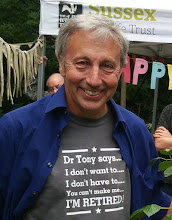
Tuesday, 23 October 2012

Disease threat to our ash trees


There is a new threat to tree health which has appeared in Great Britain, the highly destructive Chalara dieback of ash trees, caused by the Chalara fraxinea fungus. Forestry Commission has produced a briefing note about this new threat and I repeat it below almost verbatim.

BACKGROUND

Chalara has caused widespread damage to ash tree populations in continental Europe, especially common ash (Fraxinus excelsior), including its ‘Pendula’ ornamental variety. Fraxinus angustifolia is also susceptible. Chalara dieback of ash is particularly destructive of young ash plants, killing them within one growing season of symptoms becoming visible. Older trees can survive initial attacks, but tend to succumb eventually after several seasons of infection.

It was unknown in Great Britain until recently, but the first cases were confirmed in a nursery in Buckinghamshire early in 2012, on ash plants which had been imported from The Netherlands. Since then, more infected plants have been confirmed in nurseries in West and South Yorkshire, Surrey, Cambridgeshire and Lincolnshire, and in recent plantings of young ash trees at four sites: a car park landscaping project in Leicester, a Forestry Commission Scotland woodland near Kilmacolm, west of Glasgow, a college campus in South Yorkshire, and a property in County Durham. The Food and Environment Research Agency (FERA) are working to trace forward plants which had already been sold on to retail customers from the infected nursery consignments.

Chalara is being treated as a ‘quarantine’ plant pathogen, which means that Forestry Commission (FC) may use emergency powers to contain or eradicate it when it is found. This is being done in the form of Statutory Plant Health Notices which FC serves on affected owners requiring them to remove and destroy affected plants by burning or deep burial on site. Equivalent measures are being taken on land managed by the Forestry Commission. This is the only available treatment.

How you can help

1. Be vigilant – Chalara dieback could appear in ash trees anywhere in Britain, especially where young trees imported from continental Europe have been planted. Early action is essential if we are to eradicate this disease from Britain before it becomes established. FC has not found any evidence of Chalara dieback in ash trees outside nurseries and recent plantings, that is, no evidence that it has spread from new plantings into longer-established woodlands and hedgerows etc in the wider natural environment, and this gives cause for hope that it is not too late.

FC therefore urges you to inspect frequently any ash trees in your care, and especially any which have been planted during the past five or so years.  Make yourself familiar with the symptoms of Chalara dieback from the material on our website at www.forestry.gov.uk/chalara. There are other causes of ash dieback, so it is important to distinguish them from Chalara. However, if in doubt, report it.

2. Report it - Report suspicious symptoms to one of the following:

Forest Research Tree Health Diagnostic and Advisory Service
T: 01420 23000;
E: ddas.ah@forestry.gsi.gov.uk

Forestry Commission Plant Health Service
T: 0131 314 6414;
E: plant.health@forestry.gsi.gov.uk

FERA Plant Health and Seeds Inspectorate
T: 01904 465625;
E: planthealth.info@fera.gsi.gov.uk.

3. Buy with care – Be careful when buying plants to buy only from reputable suppliers, and specify disease-free stock. A list of countries where C. fraxinea is known to be present is available in the Questions and Answers document on the website www.forestry.gov.uk/chalara.

4. Be diligent - Practise good plant hygiene and biosecurity in your own gardens and woodlands etc to prevent accidental spread of plant diseases. See our ‘Biosecurity Guidance’ document available at www.forestry.gov.uk/pestanddiseases for advice on basic hygiene and biosecurity measures you can take.

5. Keep up to date – Check the website regularly at www.forestry.gov.uk/chalara for updates on developments. ‘Follow’ the Tree Pest News account on Twitter at www.twitter.com/treepestnews to receive rapid intelligence of new developments, delivered by text or email.
(Information about a wide range of other tree pests and diseases can be accessed via our www.forestry.gov.uk/pestsanddiseases page.)

Plant Health Notices
Owners of any ash plants found to be infected will be served Plant Health Notices requiring them to destroy the plants, either by burning or deep burial on site. All ash plants in a new-planting site will require to be destroyed, regardless of whether some do not have symptoms. This is because experience with other plant diseases shows that we must presume that asymptomatic plants in close proximity to symptomatic plants are almost certainly infected, but are not yet showing symptoms. However, we hope that if all parties act quickly now, few people will be affected by these measures.

Compensation
FC is not able to offer compensation for plants destroyed in order to comply with a Plant Health Notice. It is felt that the available resources are best used for surveillance and eradication work. Plants are therefore purchased and planted at buyers’ risk, and any questions about recompense would be between the customer and supplier of the plants involved. However, hopefully few people will be put in this position if all parties move quickly now to tackle this disease.

Timber
The implications for growers of ash for the timber trade would be significant if the disease were to become established in Britain. The timber in infected trees might still be usable for some purposes. However, should it get to the stage where it is infecting mature timber trees, more stringent biosecurity measures would be required to ensure that the disease is not spread further by timber movement. Again, however, hopefully rapid action now by all parties will avert this scenario.

Further information
As well as the dedicated web pages about C. fraxinea at www.forestry.gov.uk/chalara, there is further information on the EPPO website at www.eppo.int/QUARANTINE/Alert_List/fungi/Chalara_fraxinea.htm

For further help or information, please contact the woodland officer for your area (look under ‘Area’ offices in the ‘Contact Us’ area of the FC website), or contact our Plant Health Service at:

Plant Health Service
Forestry Commission
Silvan House
231 Corstorphine Road
Edinburgh
EH12 7AT
Tel: 0131 314 6214

Monday, 10 September 2012

A debate on hydraulic fracturing


I went to a very interesting meeting last week on hydraulic fracturing or “fracking”, as it has become known.  Its objective was to help the community gain a better understanding of this method of extracting gas from underground shale deposits.  Is it an economic salvation or an environmental disaster?

This was very well organised by the Wiggonholt Association and excellently chaired by Prof. Joe Howe of Central Lancashire University.  Two others on the panel were County Councillor Morwen Millson, who was asking serious questions of public concern about fracking and Nick Grealy, an energy consultant who presented the case in favour.

The panel presentations and the lively scrutiny by the audience were all very good – whether you agreed with either side or not.  However, there is a tendency (not just at this event but elsewhere in the press and in general conversation) to consider this a complex, technical, difficult issue that lay people will have difficulty understanding.  The sub-plot by some might be to say we should leave it to the experts (but who are the experts?), disempowering local opinion, painting it as uninformed and emotive.  My current view is the complete opposite.  I will not explain fracking here, I am no expert, but a short internet search will give you all the basic information you need. 

The basic approach of fracking is simple.  Yes it is surrounded by all manner of complexities but the basis is simple.  Many ecological concepts that we regularly talk to “ordinary” people about are far more complex than fracking. It is not the case that scientific experts are saying one thing – that fracking is OK – but that emotive local objectors are saying another.  There are clear scientific concerns.  So don’t be put off, do some basic reading and you’ll be in a reasonable position to question the experts.  This was very clear at the meeting.  There were many in the audience who were almost as well informed as the panel and no “blinding with science” was possible.

The benefits of fracking are clear, and again simple.  Abundant gas supplies providing vast sums of money.  This is part of the emotive appeal of fracking, often presented as the key fact that trumps everything else.  Worryingly, I suspect this may prove correct.

In my mind the concerns about fracking boil down to 3 key areas.
  • Water resource use
  • Water contamination and disposal of fracking fluid
  • Climate change.


Water resource use
Huge amounts of water under pressure are needed to pump into a well in order to fracture the rock deep underground that holds the gas.  In a water-stressed region this is bound to be a concern.  Some answers to this point were rather unconvincing.  Desert regions elsewhere still carry out fracking, indicating that even they are not worried by water use.  I do not agree - bad practice in one area does not justify its use in another.  Nevertheless, total water use might be a relatively small proportion of our overall use so, at the right time of year and done in the right way there could be a technological solution to this.

Fracking fluid
Water pumped into a fracking shaft contains various chemicals, some of which we should be concerned about.  Fracking fluid coming out of the shaft is further contaminated by whatever it came into contact with in the underlying rock.  Attempts to dismiss this concern were, I am afraid, rather insulting, relying too heavily on assumed ignorance in the audience.  99.5% of what emerges, we were told, is still water.  Well, let us use an analogy.  Probably more than 99.9% of your morning cup of tea is water but I suggest you would not be happy with just boiled water.  Add a spoonful of sodium cyanide and it would still be mostly water, but I suggest you wouldn’t touch it!  (This is not to suggest that fracking fluid consists of either cyanide or boiled tea!).  Polluted water from industrial processes has been a problem since the Bronze Age, there is nothing new here and the weakness of the response was worrying.  The answers must be very clear and well-known – either transport fracking fluid away to be treated (huge numbers of truck movements) or treat and dispose on site or treat and recycle on site.  All approaches have huge issues which should be seriously addressed.

Fundamental to these issues is regulation.  If there are technical solutions then we must be absolutely convinced that regulation is in place and that it is robustly applied.  I am not confident about either.

Climate change
We are told that natural gas produces 50% less carbon dioxide than coal and that it therefore provides an excellent transition to cleaner energy.  There are several things wrong with this:

First this does not allow for any effect of methane (natural gas) leakage.  Methane is up to 70 times worse than carbon dioxide as a greenhouse gas.  Some estimate that, with leakage of a few percent, this could make fracking as bad to twice as bad as coal.  Opinions vary, but the industry claims this is untrue - why would a business waste so much of its product?  I remain sceptical – an industry’s cost-benefit analyses may point to it being more economic to waste a few % rather than go to the effort of plugging every last gap.  Arguably, however, this might be solvable but again may rely on robust regulation, detection and enforcement (how confident are you?).

Second, that figure of 50% less carbon only gets you a little way.  If we changed our remaining coal-fired power stations to gas tomorrow and energy use, inevitably, continues to rise, then in a few decades we will be using twice as much energy.  So – twice as much energy producing 50% less carbon per unit energy means a total of the same amount of carbon as we produce today.  Even without the fear of methane leakage, gas usage will continue to fry the planet.

Several academics active in this area say that, from a climate change perspective, the only safe thing to do with gas from fracking is to leave it in the ground.

There does remain, however, the possibility of using fracking as a transitional energy source on the way to carbon free energy.  An interesting idea but there are major worries, for instance:
  • We’ve been here before.  Renewable energy was abandoned in the 1970’s when we found oil in the North Sea. 
  • Why would a gas company engage in a “transition” strategy that would result in its own eventual destruction.
  • With all that money rolling in to shareholders and going to the public purse as tax revenue, who is going to change course to systems that will inherently be more expensive.
  • We are told that there could be 200 to 1000 years’ supply of gas available from this method globally. If true, then no one is going to stop production in a few years. 

Meanwhile, we now hear that the arctic ice has broken all records in terms of the amount lost this summer, three weeks before the normal minimum, for arctic ice cover.  Unless better answers are found, climate change repercussions could be a complete show-stopper for fracking. 


Tuesday, 21 August 2012

Leadership still needed for nature’s recovery.


A recent House of Commons report is disappointed with the progress made since the Natural Environment White Paper was published.  

It’s been just over a year since the Natural Environment White Paper (NEWP) came out.  I welcomed this at the time  – it reflected many important points in the independent report on Britain’s ecological network (“Making Space for Nature”) and picked up key messages from the National Ecosystem Assessment.

Action is taking place on several of the commitments in the White Paper, and we in the Wildlife Trusts are contributing to many of them, but are we achieving the step-change in ambition for the environment that we feel is required?

The House of Commons “Environment, Food and Rural Affairs Committee” (EFRA) has now examined the policies in the White Paper to see how it has done over the last year and has come up with several key concerns. Find this report here.  I welcome the report.  It reflects some of the worries I have with progress over the past year and gives valuable guidance to government on what needs to happen now.

Overall, I don’t think we as a nation have grasped the basic point.  We depend on the natural environment for services that are essential to human well-being.  Putting a financial value on something that is “essential” is dubious, but if you did then it is clear these services are worth billions of pounds to the UK economy.  The NEWP recognised this but government is not showing the leadership needed in order to ensure that all Whitehall departments fully value nature’s benefits.

The Department of Food, Environment and Rural Affairs (DEFRA) is to be congratulated for the work it has done in this respect but the report says that stronger leadership is also required from HM Treasury and the Cabinet Office to effect the necessary culture shift amongst policy makers.  All government policy and legislation must be proofed for consistency with the government aspiration that the value of nature is fully reflected in decision making.

So far this has not happened.  NEWP’s laudable aims have not been incorporated into policies on transport and planning for instance.  This will affect us here in Sussex.  Although much improved over early drafts the new National Planning Policy Framework does not pay enough attention to NEWP so guidance is now needed to help planners and developers protect the environment.  Without this, government’s laudable environmental objectives will point us in one direction whilst the push for development will send us the opposite way.  Sussex, and the counties around London, are the most likely areas to feel this clash.

We need to incorporate the value of nature into everything we do – basically we need to pay for the essential services that nature provides.  We are all bogged-down in the idea that looking after the environment is a “cost”, because we don’t work out the value of the benefit (if we did then we’d realise that benefits can be 100 times the costs).  Nevertheless, government is unlikely to commit more public money to environmental resilience.  The report therefore says that DEFRA should set out how payments can flow from the beneficiaries of ecosystem services to those who protect and enhance environmental systems.  There are few good examples of this so far, but the National Ecosystem Assessment gives a wealth of evidence to help us achieve this.

The Natural Environment White Paper was a good step forward and some progress has been made.  However, we are in danger of resting on our laurels because of one or two good initiatives.  The fundamental changes are yet to be made.

Friday, 6 July 2012

Saving the Forestry Commission is just the start.


Government has now committed to keeping the public forest estate in public hands.  This, however, is not the end of the matter.  There are many good recommendations in the Independent Forest Panel report and we need to ensure that these now get adopted.

The point I’d like to pick up in this blog is about woodland management and restoration.

Woods generally need to be managed in order to keep the whole forest ecosystem in a good state.  This may seem counter-intuitive because surely woods are “natural” and should be able to look after themselves.  This is a big subject and perhaps something I’ll touch on in another blog but for the present I’ll just summarise by saying that woods are not natural, they are semi-natural.  They are the product of centuries of interaction between people and wildlife; their value will generally be best maintained by keeping that interaction going – ie traditional management.

There are exceptions, but generally woods are best when they are managed.  Obviously this is not carte blanche for any management, it has to be appropriate.  But, done well, we are really talking about sustainability, not simple exploitation.

The Forest Panel report does bring this out.  This should provide good support for the forest industry, and in the process should underpin the public benefits gained from woodland (whether public or private).

What does this mean in practice?  Woodland wildlife is under threat – species and habitats are still in decline.  This is not due just to woodland loss (although this will contribute in some areas), indeed woodland area has increased steadily over the last 100 years.  The evidence shows that one main cause of woodland decline is woods becoming dark and overshadowed.  This is linked to lack of management.

For centuries, when woods were managed this provided clearings and openings within woods which then went through regeneration and growth before becoming dense woodland again.  The result was a patchwork within woodland, all at different stages of growth and supporting a diverse range of species.  This, in effect, mimics the natural disturbance that might have taken place in truly natural woods.  If management stops, the diversity goes and woods become dark and overshadowed.

The nightingale provides just one example of a species that has suffered as our woods have dropped out of management.  This is a woodland bird that has declined as woods have increased.  The reason, it actually prefers shrubby regrowth - part of the woodland regrowth cycle.  If woods get dark and overshadowed consisting of tall trees with little shrubby regrowth then nightingales loose habitat.

Today nightingales are often found in blackthorn scrub rather than in woodland.  However where woodlands are managed the nightingales can return.

I’ll stress again that there are exceptions to this rule.  There are woods that are to some extent “re-naturalised” and are maintaining their own diversity without the need for great management input.  These places are special, there should probably be more of them and they need special consideration.

But staying with nightingales, try this link – an incredible recording of nightingales in the second world war, singing as the RAF bombers flew overhead.  It’s a long track – but listen and you can here the birds sing louder as the planes get closer! 

A sign of success for forest policy in the UK will be if southern England once again reverberates to the sound of nightingales every spring.

Wednesday, 4 July 2012

Forest Panel Report – it’s out and it’s not bad!


The Independent Panel on Forestry’s report was published today and I have now had a chance absorb its contents. 

The headline is that, despite concerns to the contrary, the report clearly states that the forest estate should remain in public ownership.  This is not too much of a surprise.  I am a little remote from the panel itself but I did attend a couple of its events and the whole thrust of any discussion did support the continued role of a public forest estate.

However, just keeping the forests public is not enough by itself.  We asked for a strong Forestry Commission with a renewed remit.  So, if we check the report against the recommendations The Wildlife Trusts made, how does it measures up?

  • The report does propose an enhanced remit for the Forestry Commission, as we recommended, focusing on delivering benefits for people, nature and the economy. 


  • It also does fairly well in promoting forests as integral parts of a coherent and resilient ecological network.  I would have preferred the report to say more – a healthy forest ecosystem within a coherent ecological network is the essential first step to any of the benefits we get.


  • It is less good in improving protection for woodland, especially ancient woodland – it does show a refreshed commitment to protection, which is important, but does not offer anything new. 


  • It is, however, quite strong in promoting the use of forests to improve the connection between people and the environment.  There are many opportunities for FC to be at the centre of re-energised community involvement in woodlands, we know plenty of existing good examples, it just needs to happen more often.


  • Although the report does propose an expansion of woodland, to extend, buffer and link woods it does not go far enough in promoting a “right tree in the right place” principle.  Hopefully the days of poorly designed plantations are over; however the report does promote a huge increase in tree cover.  This could be a good thing, but only if done sensitively. 


  • In the same vein, the report could say more about the restoration of open habitat like heaths and meadows.  Open habitats tend to get forgotten, or even seen as countering forest productivity, but they are some of our most threatened habitats.  Perhaps promoting planting trees in one place to make up for trees lost when open habitats are restored in another may ease any potential tension.


  • Lack of management in woods is a major cause of wildlife decline so it is good that the report is quite strong on restoration of woods.


Overall then, the report is pretty good.  And there are other messages in there that deserve emphasis.

In the body of the report it mentions that if we calculate financial value of all the public benefits that the public forest estate provides (including the easily calculated values like timber, but also the less easily valued benefits from healthy, functioning ecosystems) then we find the estate delivers £400M in public benefit a year.  The report also admits that this is an underestimate – the true value is probably much more.  The cost to the public is only £20M per year.

So – the Public Forest Estate provides a yearly 20:1 return on investment - in perpetuity!  And that’s an underestimate.  Every £1 we don’t spend on forests is £20 wasted.

I doubt that there is any other investment that could match this, indeed even some proposed road schemes struggle to reach a 1:1 return on investment.

This makes a general point.  If we actually calculate the benefits we get from healthy, functioning ecosystems then their value is huge (probably irreplaceable and probably should just be considered a poor approximation of infinity).  The past situation where the FC had to continually sell woods in order to balance its books was a failure in our economic system, not a failure of FC.

Of over-riding importance is the need for our society to gain a better understanding of the whole value of nature (in this case in forests).  This is a point made in the very first recommendation in the report – “We urge society as a whole to value woodlands for the full range of benefits they bring….”.  There is thus a very strong emphasis on really appreciating the ecosystem services provided by forest ecosystems.  The superficial, short-term financial valuing of a few of the most easily measured attributes (such as timber value), although important in themselves, are just one benefit from healthy functioning forests.  Add in the rest and our decisions will be different.

Looking back at the National Ecosystem Assessment last year - and lining it up with statements in this report, the optimist in me says that it will be in forest ecosystems where we at last start to value the natural capital on which we depend and make this value fundamental to our decision making.

Government will respond to the report by next January but already Caroline Spelman, Secretary of Sate for the Environment has committed by saying that “our forests will stay in public hands”.

This is not “job done”, however.  This is the panel’s report not a government report.  The report has a lot of good recommendations in it (plus a few short-falls) so it is important that government are persuaded to pick up the good points (and fill any gaps).  So, we now need to see how government will respond.

Thursday, 28 June 2012

We await the report of the Independent Forest Panel, due to be published on 4th July


Earlier in 2011 the government announced its consultation to look into the disposal of the Public Forest Estate – the land managed by the Forestry Commission (FC).  This was an ill-considered move and it led to a predictable public outcry.  Disposal of the Public forest Estate has been considered at various times in the past, the environmental NGOs have opposed it each time, and each time the government has pulled back and the estate is safe for a bit longer.  (Except for the fact that FC have had to continue to sell individual forests in order to try to balance the books).

Two things were different this time.  First was the level of public outcry – heartfelt and well-organised, coming as a welcome surprise to NGOs and as a shock to government.  See, for instance "Save Our Woods"

Second was the government response – to set up an independent panel to look at the future of the Forestry Commission and the Public Forest Estate.  My link to the panel is remote, and opinions vary as to whether this is either a put up job or a valuable independent review.  We will discover which next week when the report is published.

The response of some organisations is to set out criteria against which they will measure the panel report.  The Wildlife Trusts have produced their view here.

 The Public Forest Estate represents the single biggest opportunity to implement the commitments made in last year’s Natural Environment White Paper and the recommendations made in the independent “Making Space for Nature Review”.  It is critical that this opportunity is taken.  The Public Forest Estate (and the body managing it) must have a clear purpose that focuses on excellence in environmental management.  It should be given the responsibility and resources to work in partnership across all sectors, from local communities to wood-based industries to enhance England’s ecological network and deliver ecosystem services (including such key public benefits as access).

The Wildlife Trusts have been working with the Forestry Commission for decades.  About 30 years ago this was often from the perspective of conflict – we saw the Commission as largely damaging to nature.  The FC of today is a very different organisation to the FC of the past – I have been on their various meetings and committees for about 20 years (from the perspective of a critical ecologist – I do not come from the perspective of automatic support) and whilst we may have had some lively discussions, criticisms of the organisation has been extremely rare.

But – coming from the perspective of two decades of critical questioning of FC, from a perspective of not automatically supporting anyone and having no political ideal about land ownership – I feel that FC has an excellent history of delivery and now has a very strong role to play in delivering environmental and other public benefits in an outstandingly cost effective way.  It could do more with an improved remit and in order to do more it must have the resources and responsibility to deliver.

I hope that the panel report will recommend a new remit for the FC, focussing on nature and the delivery of public benefit and acting as an exemplar of sustainable management:  
  • It should promote forestry as part of a coherent strategy for the natural environment with woods being one part of a diverse and resilient ecological network.
  • Woods, especially ancient woods should be better protected and better managed.
  • It should promote a reconnection of people with nature through good access to forests.
  • It should encourage a “right tree in the right place” principle reconnecting woods through appropriate woodland expansion at a landscape scale.
  • It should restore existing woodlands, continuing an already active programme of woodland restructuring in order to better deliver public benefit.
  • Furthermore it should look after all habitats in its care, not just the wooded areas – areas of lowland heathland, meadows and other open habitats, currently planted with conifers should be restored with urgency.

To fulfil this remit the FC will have to be bigger and be better resourced.  Is this likely at a time of austerity?  Well maybe.  If you count the benefits of a public forest estate, not just the cost, then investment in the FC is possibly one of the greatest returns on investment you can make!


Friday, 8 June 2012

Destruction in Sumava National Park


There has been quite a movement in recent years to find some level of protection for near-wilderness areas in Europe.  Actual wilderness probably does not exist anywhere in this part of the world, but there are pockets where natural processes and the range of wildlife are still extensive enough for us to consider it near enough to being wild.  I doubt there is anywhere in England that we could consider in this category – our nature reserve at “The Mens” is perhaps close, but it is still nothing like wilderness.

In some places elements of the “wild” are being recreated, such as Oostvaardersplassen in Holland, and in others, such as the Bialowieza in Poland, you can get pretty close to wild forest.  But anything near wilderness in Europe is a rare and precious thing.

One such rare and precious thing is the Sumava National Park in the Czech Republic, but this is now under threat.  A small but influential element in the new Czech administration is proposing imminent legislation that will restructure Sumava, enabling large-scale felling of forest in what is currently its core non-intervention area, and development of a ski lift with other infrastructure in close proximity.

Widely known as the “Wild Heart of Europe” this area is iconic among scientists, and in the tourism sector, for the intact state of its ecology governed by natural processes, and for the unspoiled beauty of its landscape.  It is seen as a symbol of the care which the Czech Republic extends towards its natural heritage.

Yet the actions currently planned will cause damage to this ecology that will take many decades to repair, as well as changing the character of the wider area forever.

Above all, this is a clear signal that even the best known National Parks are not protected.   Beyond being a tragedy for the iconic ‘Wild Heart of Europe’, this action poses a challenge to the protective status of National Parks everywhere.

The Czech Republic has an excellent record of caring for its national heritage, and the proposed legislation for Sumava is opposed across the Czech scientific establishment. In 2008, over 130 conservation organizations across Europe united to petition for improved protection of wilderness areas. The following year, the European Parliament passed a Resolution along similar lines, supported by a massive 538 votes.  This recent step would be a huge step backwards.

Conservation organizations are petitioning the Czech government to think again.  This petition is targeted on organizations rather than individuals but I think it is important that everyone should know of the threat to one of Europe’s last surviving near-wilderness areas.