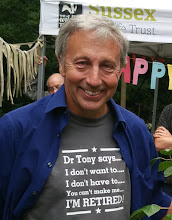
I was delighted to hear that the South Downs has been awarded some £608,000 to become one of the Nations 12 pilot Nature Improvement Areas (NIA). We have been working with the South Downs National Park Authority, along with 26 other partners across the South Downs, to help develop the proposal and this recognition of the project is great news.
NIAs were one of the good commitments that came out of the Natural Environment White Paper published last year, the aim being to enhance and reconnect nature on a landscape scale.
http://www.naturalengland.org.uk/ourwork/conservation/biodiversity/funding/nia/default.aspx
The White Paper stated that government wished to see “NIAs wherever the opportunities or benefits are greatest, driven by the knowledge and vision of local partners”. The 12 pilot NIAs, including that for the South Downs will hopefully therefore just be a starting point.
As pilot NIAs, the successful bids therefore aim to pilot something. The very clear message from the National Ecosystem Assessment, reflected in the White Paper, is that nature is not adequately valued in our economic decision making. We rely on nature for everything and yet most of the goods and benefits we get from nature (ecosystem services) are ignored or taken for granted. The South Downs pilot NIA aims to look at one small part of that equation.
Our chalk downland is vital for the survival of some of our most cherished wildlife – such as the orchid-rich downland turf and uncommon butterflies such as the Duke of Burgundy fritillary. As nature conservationists we would like to enhance, expand and join up this valuable habitat. This would be to the benefit of downland wildlife but in the process could improve the Downs in terms of the benefits people get.
Obviously we get food from the Downs – and it is the sensitive sheep-grazing regime that has created the downland landscape we know today. So food, in particular meat from lamb, is a clear benefit.
But a well-maintained downland turf also allows clean water to percolate underground to replenish our water supplies. We get nearly 80% of our water from underground aquifers; erosion, pollution or an excess of fertilisers can damage this and result in large treatment costs.
The South Downs is also a major green-lung to people in Sussex, not least for the major urban centres in places like Eastbourne and Brighton. The enjoyment of the Downs for recreation, exercise or even just the chance to see a Duke of Burgundy fritillary is another benefit we all get which is impossible to put a price on.
A large number of other services are also provided by a rich environment – far too many to list, or put a price on (what price on a bee that pollinates our crops…). But the South Downs NIA will try to make a start at recognising the wider benefits provided by a wildlife-rich landscape.
The farmers of the South Downs are fundamental to all of this. Environmentally sensitive farming is an ethic to many farmers but their returns for practicing it are limited. At present, if they are lucky they may get an economic return by producing food. But all the other benefits they produce are barely recognised. I hope the NIA will help to find ways of rewarding people like farmers and landowners for the benefits we all receive – maybe by looking again at our agricultural incentive schemes or by finding novel sources of funding.
Showing posts with label Nature Improvement Areas. Show all posts
Showing posts with label Nature Improvement Areas. Show all posts
Monday, 27 February 2012


Friday, 10 February 2012
Natural environment white paper – progress
We were very pleased with the publication of the Natural Environment White Paper last June and quite a lot has happened since then to take it forward in Sussex. This is good stuff and I feel that we are working through some of the concerns I had when it first came out.
Two of the initiatives from the White Paper were “Local Nature partnerships” and “Nature Improvement Areas”.
Local Nature Partnerships (LNPs) were supposed to be the development of new or existing partnerships to champion nature and the environment in an area. I had some major concerns about the lack of resources, demanding timescales and rather broad guidance but we have been fortunate in getting funding to develop the idea in Sussex. We are now talking to a wide range of partners with the idea of developing our current Biodiversity Partnership into an LNP. We will not be able to apply for LNP status until later in the year but we hope that this background work will bare fruit.
One activity of a LNP must be to try to embed the value of nature into our economic decision making. Government therefore wants LNPs to have good links with Local Enterprise Partnerships (LEPs). This is good, but I not sure anyone has mentioned this to the LEPs. One early job, therefore, will be to try to build better links with the business community.
So, in a few months time, we should have an LNP for Sussex. More of what that might mean another time.
A Nature Improvement Area (NIA) has also been developed in Sussex by the National Park Authority for the South Downs ridge. A very professional bid has been put forward and we know it has got through to the last 15 (12 will be granted NIA status and receive funding to support its objectives). The National park Authority, with the support from a South Downs farmer, did a presentation to the selection panel this week. I am confident that they will have made a good pitch so good luck to them. We will know very soon whether the South Downs bid has been successful.
Since the publication of the White Paper, however, I have always been worried that these 12 “pilot” NIAs will end up as the only ones. The NIA concept is good but these large scale initiatives should be found all over the country, not just in 12 places. In practice I could think of very good arguments for more than 12 NIAs in Sussex alone. It does seem, however, that government does not intend to limit ecological networks to the lucky 12 pilot NIAs. Minsters have now said that they want to see NIAs wherever the opportunities or benefits are greatest, driven by the knowledge and vision of local partners. I am not sure how much, or whether, funding will be available for a proper network of NIAs but the idea that the UK’s failing ecological network will be fixed by just 12 NIAs should now have disappeared.
Two of the initiatives from the White Paper were “Local Nature partnerships” and “Nature Improvement Areas”.
Local Nature Partnerships (LNPs) were supposed to be the development of new or existing partnerships to champion nature and the environment in an area. I had some major concerns about the lack of resources, demanding timescales and rather broad guidance but we have been fortunate in getting funding to develop the idea in Sussex. We are now talking to a wide range of partners with the idea of developing our current Biodiversity Partnership into an LNP. We will not be able to apply for LNP status until later in the year but we hope that this background work will bare fruit.
One activity of a LNP must be to try to embed the value of nature into our economic decision making. Government therefore wants LNPs to have good links with Local Enterprise Partnerships (LEPs). This is good, but I not sure anyone has mentioned this to the LEPs. One early job, therefore, will be to try to build better links with the business community.
So, in a few months time, we should have an LNP for Sussex. More of what that might mean another time.
A Nature Improvement Area (NIA) has also been developed in Sussex by the National Park Authority for the South Downs ridge. A very professional bid has been put forward and we know it has got through to the last 15 (12 will be granted NIA status and receive funding to support its objectives). The National park Authority, with the support from a South Downs farmer, did a presentation to the selection panel this week. I am confident that they will have made a good pitch so good luck to them. We will know very soon whether the South Downs bid has been successful.
Since the publication of the White Paper, however, I have always been worried that these 12 “pilot” NIAs will end up as the only ones. The NIA concept is good but these large scale initiatives should be found all over the country, not just in 12 places. In practice I could think of very good arguments for more than 12 NIAs in Sussex alone. It does seem, however, that government does not intend to limit ecological networks to the lucky 12 pilot NIAs. Minsters have now said that they want to see NIAs wherever the opportunities or benefits are greatest, driven by the knowledge and vision of local partners. I am not sure how much, or whether, funding will be available for a proper network of NIAs but the idea that the UK’s failing ecological network will be fixed by just 12 NIAs should now have disappeared.
Thursday, 7 July 2011
The Natural Choice: securing the value of nature
Well the Natural Environment White Paper that we have all been waiting for has now been published and we have had some time to think about its contents.
Since before the election, the Wildlife Trusts, along with other environmental NGOs have been pushing for a new impetus for the natural environment. The UK failed to meet its 2010 biodiversity targets, wildlife is in continual decline and we are struggling to meet other environmental standards. More of the same is not an option. Is the Natural Environment White Paper, entitled “The Natural Choice: securing the value of nature” going to be the step-change in the ambition for the environment that we are all hoping for?
The starting point…
Taking the messages from “Making Space for Nature” and the “National Ecosystem Assessment” together, we have to conclude that whilst the natural world is essential to our existence, biodiversity in the wider environment is reducing and our current scatter of wildlife sites does not comprise a coherent ecological network. Our ecosystems are consistently undervalued and many of our essential ecosystem services are in continual long term decline.
So does the white paper set the right direction?
Generally I would have to say that the overall trajectory looks good. I have been fairly critical of government in past blogs – it seemed to be environmentally floundering - but I said then that the white paper is a major opportunity to turn this around.
The Wildlife Trusts have therefore welcomed the white paper. However, I am concerned that there is insufficient detail to be confident that Government is fully committed to making the vision a reality. The paper lacks the sense of urgency we believe is required.
There a re 4 key areas in the White Paper:
Nature Improvement Areas. I prefer “Ecological Restoration Zones” as it said what they should do – restore ecology. Nature improvement sounds weaker. Nevertheless the concept was promoted by the Wildlife Trusts and we are pleased it is in the white paper. However, they are currently non-statutory and there will be a competition for the first 12 such areas. As the aim is to restore a coherent ecological network, just 12 are hardly significant. There should be lots of them everywhere, and connected throughout the landscape. In Sussex alone we have identified 75 biodiversity opportunity areas. That gives a better idea of the scale needed. 12 for the whole country really is just a start. Hopefully we can look forward to the parallel development of Nature Improvement Areas everywhere, embedded in the new planning framework and with the funds to deliver.
Local Nature Partnerships were promoted by The Wildlife Trusts, RSPB and CPRE in the lead up to the white paper. The proposal is for around 50 in England, so they will have to be strategic in outlook, should work at a landscape scale and should be outcome focused. All good stuff. But timescales to form these are too short so it will be hard work to form coherent structures so that these strategic partnerships link up with all the really local partnerships. If we are not careful the rush to form LNPs, and attract the money that’s on offer, will actually set people up in competition and effectively undermine partnership working.
Ecologically coherent planning. It remains to be seen how ecological coherent the planning system will be at a time when government seems to be loosening up planning laws. A general reference to a National Planning Policy Framework seems unconvincing and whilst it does mention a presumption in favour of sustainable development I thought that had been the case – at least on paper – since 1992. I am sure it is right to look for win-win solutions where both development and the natural environmental are delivered at once but there will be conflicts and at present it looks like the same old story where development will take precedence.
Biodiversity offsets offer huge dangers but also huge opportunities so must be looked at carefully. Done badly it could de-value nature and be a licence to destroy. Done well, and underpinned by firm protection for wildlife, it could be a major mechanism for enhancement. Fortunately the DEFRA team working on this are aware of the dangers and the benefits.
Some may feel that the white paper has deliberate “trip hazards”, designed to make something that sounds good very difficult to implement in practice. The jury is out but I remain optimistic. Unrealistic timescales, feeble resources, limited practical ambition and questions regarding reconciliation with other government initiatives are all worrying. But it also mainstreams ecological restoration and the valuing of nature. I’ll take Caroline Spelman’s introduction to the white paper as setting the tone for its ambition:
“Too often, we take for granted the goods, services and amenity value that nature freely provides us. They risk being lost as a consequence. We can and must do things differently.”
Since before the election, the Wildlife Trusts, along with other environmental NGOs have been pushing for a new impetus for the natural environment. The UK failed to meet its 2010 biodiversity targets, wildlife is in continual decline and we are struggling to meet other environmental standards. More of the same is not an option. Is the Natural Environment White Paper, entitled “The Natural Choice: securing the value of nature” going to be the step-change in the ambition for the environment that we are all hoping for?
The starting point…
Taking the messages from “Making Space for Nature” and the “National Ecosystem Assessment” together, we have to conclude that whilst the natural world is essential to our existence, biodiversity in the wider environment is reducing and our current scatter of wildlife sites does not comprise a coherent ecological network. Our ecosystems are consistently undervalued and many of our essential ecosystem services are in continual long term decline.
So does the white paper set the right direction?
Generally I would have to say that the overall trajectory looks good. I have been fairly critical of government in past blogs – it seemed to be environmentally floundering - but I said then that the white paper is a major opportunity to turn this around.
The Wildlife Trusts have therefore welcomed the white paper. However, I am concerned that there is insufficient detail to be confident that Government is fully committed to making the vision a reality. The paper lacks the sense of urgency we believe is required.
There a re 4 key areas in the White Paper:
Nature Improvement Areas.
Local Nature Partnerships
Ecologically coherent planning,
Biodiversity offsets.
Nature Improvement Areas. I prefer “Ecological Restoration Zones” as it said what they should do – restore ecology. Nature improvement sounds weaker. Nevertheless the concept was promoted by the Wildlife Trusts and we are pleased it is in the white paper. However, they are currently non-statutory and there will be a competition for the first 12 such areas. As the aim is to restore a coherent ecological network, just 12 are hardly significant. There should be lots of them everywhere, and connected throughout the landscape. In Sussex alone we have identified 75 biodiversity opportunity areas. That gives a better idea of the scale needed. 12 for the whole country really is just a start. Hopefully we can look forward to the parallel development of Nature Improvement Areas everywhere, embedded in the new planning framework and with the funds to deliver.
Local Nature Partnerships were promoted by The Wildlife Trusts, RSPB and CPRE in the lead up to the white paper. The proposal is for around 50 in England, so they will have to be strategic in outlook, should work at a landscape scale and should be outcome focused. All good stuff. But timescales to form these are too short so it will be hard work to form coherent structures so that these strategic partnerships link up with all the really local partnerships. If we are not careful the rush to form LNPs, and attract the money that’s on offer, will actually set people up in competition and effectively undermine partnership working.
Ecologically coherent planning. It remains to be seen how ecological coherent the planning system will be at a time when government seems to be loosening up planning laws. A general reference to a National Planning Policy Framework seems unconvincing and whilst it does mention a presumption in favour of sustainable development I thought that had been the case – at least on paper – since 1992. I am sure it is right to look for win-win solutions where both development and the natural environmental are delivered at once but there will be conflicts and at present it looks like the same old story where development will take precedence.
Biodiversity offsets offer huge dangers but also huge opportunities so must be looked at carefully. Done badly it could de-value nature and be a licence to destroy. Done well, and underpinned by firm protection for wildlife, it could be a major mechanism for enhancement. Fortunately the DEFRA team working on this are aware of the dangers and the benefits.
Some may feel that the white paper has deliberate “trip hazards”, designed to make something that sounds good very difficult to implement in practice. The jury is out but I remain optimistic. Unrealistic timescales, feeble resources, limited practical ambition and questions regarding reconciliation with other government initiatives are all worrying. But it also mainstreams ecological restoration and the valuing of nature. I’ll take Caroline Spelman’s introduction to the white paper as setting the tone for its ambition:
“Too often, we take for granted the goods, services and amenity value that nature freely provides us. They risk being lost as a consequence. We can and must do things differently.”
Subscribe to:
Posts (Atom)